

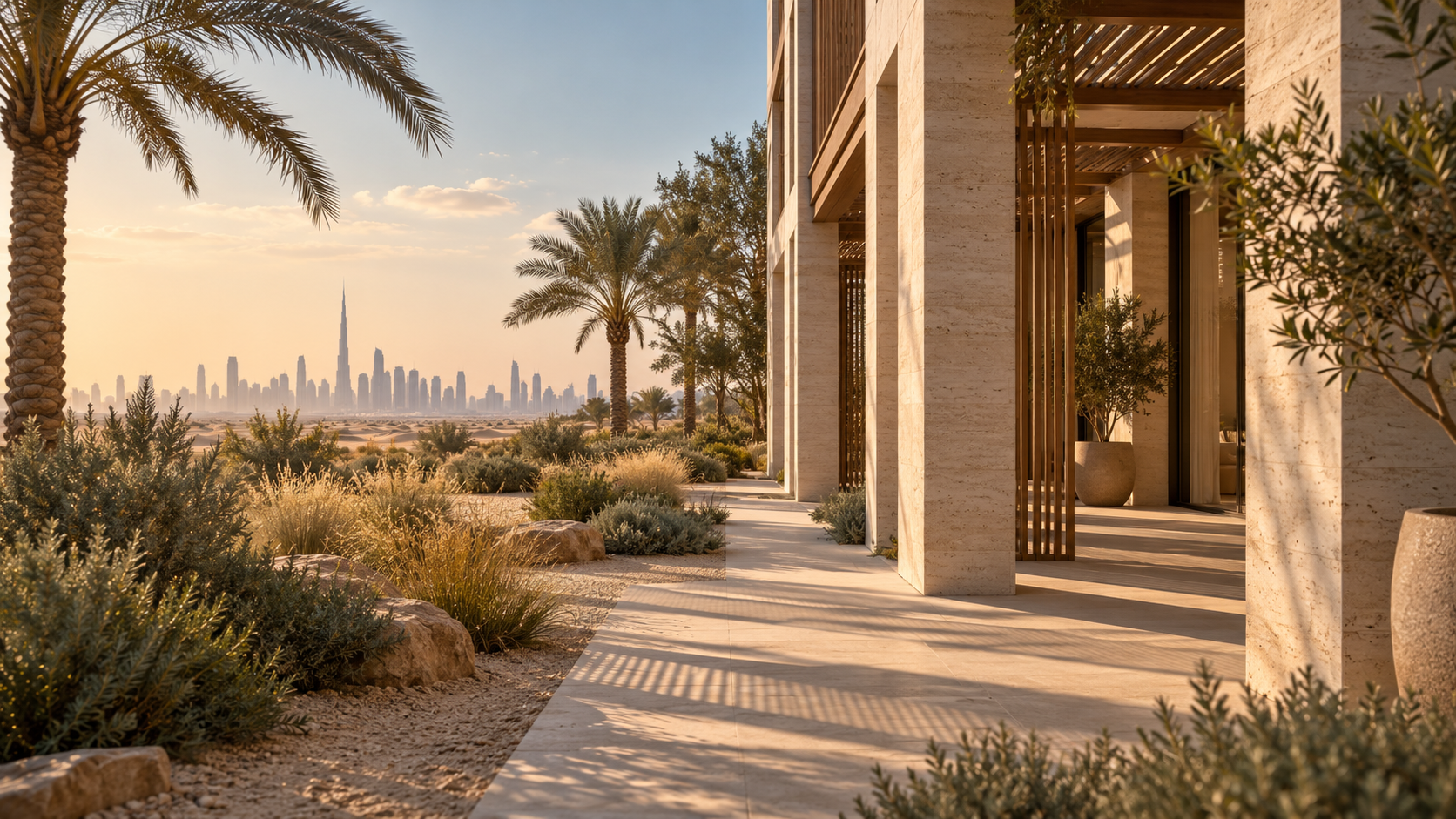
The UAE is no stranger to challenging climate conditions. With rising temperatures and changing weather patterns, the way we design and develop buildings matters more than ever. For the real estate sector, sustainability goes beyond creating greener buildings. It means designing places that can adapt to a changing climate, protect people and perform well over time. Through thoughtful design, innovative technologies and sustainable architecture, the UAE can build a more resilient future while supporting its long-term sustainability goals.
Key takeaways
- Building for climate resilience: Thoughtful strategic design can help buildings withstand extreme weather conditions while creating comfortable and sustainable communities in the UAE’s arid climate.
- Designing for cooler spaces: Shade, effective insulation and carefully selected glazing helps reducing heat entering buildings and improve indoor comfort.
- Making every drop count: Water-efficient fixtures, leak detection systems, smart irrigation and climate-appropriate landscaping can help make better use.
- Planning for the unexpected: Even in a region where rainfall is limited, well-planned drainage systems are essential for managing sudden and heavy rainfall.
- Thinking beyond construction: A building’s long-term performance depends on proper commissioning, regular monitoring and ongoing maintenance, supported by reliable project-specific data.
The desert & the weather may feel extraordinary. But Its beauty comes from a delicate relationship with its surroundings, right conditions and its ability to respond to a demanding environment. But what we need to understand, for the UAE’s built environment how can homes and neighbourhoods flourish while respecting the climate that shapes them?
At Bearys Global, our mission clearly set architecture that is functionally sound and environmentally conscious. The question of resilience brings that philosophy into everyday focus on how a home feels, how resources are utilized and how a community prepares for change. Explore Bearys Global’s approach
How does the UAE’s climate affect buildings and communities?
The UAE’s arid climate creates several connected design considerations:
- Heat and sunlight manage solar heat gain and support thermal comfort.
- Coastal humidity addresses the local conditions when planning indoor and outdoor comfort.
- Use of water towards the needs of buildings and landscaping.
- Preparing drainage and surface-water routes for sudden downpours during irregular rainfall.
Conditions vary by different locations, so a building’s response should begin with its own site rather than a single assumption about desert weather. The Abu Dhabi Residents Office highlights the importance of local conditions which shape not only a building’s appearance but also the comfort and everyday experience of the people living in it. Source: Abu Dhabi Residents Office
For residents, these conditions turn into practical questions. Does afternoon sunlight overheat a room? Is the route to a shared entrance shaded? Can landscaping remain healthy without excessive irrigation? How does the property manage a sudden downpour? The answers influence daily experience as much as architectural appearance.
What does climate change mean for UAE real estate?
Climate change adds a long-term planning to the UAE’s existing challenging climate conditions. DEWA identifies heatwaves, floods, droughts and storms among the climate-related hazards affecting the country’s power and water sectors. Its resilience planning considers location, asset age and design when assessing vulnerability. Source: DEWA
The implication is to evaluate how buildings respond to those services and how their own design strategies and operations tend to change under dynamic conditions. Existing desert heat and a changing climate are related considerations, but they are not interchangeable. One describes the current setting while the other requires planning for a building’s future life.
Two complementary responses that matter:
- Mitigation reduces the emissions associated with constructing and operating buildings.
- Adaptation in preparing buildings and communities to cope with climate impacts.
An energy-efficient building can contribute to mitigation. Resilience also asks how it handles disruption, protects essential equipment and supports recovery.
How can sustainable architecture design help communities thrive in arid climates?
The following are design practices for UAE developments. However, It depends on the suitability and performance on each project site, engineering and operations.
1. Planning of shade and thermal comfort
- Orientation: results in how the building is exposed to the sun.
- External shading: limit exposing to direct sunlight where it should be appropriate.
- Insulation and glazing: selected specifications that suit the climate.
- Cooling systems are coordinated equipment with the building’s design.
At community level, shaded entrances, pedestrian routes and resting spaces deserve similar attention. Comfort begins before someone reaches their front door.
2. Efficient use of water a part of everyday design
- Indoor fixtures that specify support for efficient water use.
- Leak detection to identify water losses so they can be addressed.
- Irrigation to plan watering around the landscape requirements.
- Planting locally appropriate, drought-tolerant species.
A planted space should be assessed through its water requirements, shade, maintenance and suitability of its location. The presence of greenery alone does not demonstrate environmental performance.
3. Preparation for heavy rainfall as well as dry conditions
- Surface water routes to decide on how rainwater moves across the property.
- Drainage capacity: how the site manages heavy rainfall.
- Vulnerable areas: protection for basement access points and electrical spaces.
Resilience is specific to place. The appropriate response depends on a property’s levels, surroundings and infrastructure connections, supported by professional assessment.
4. Design for performance throughout the building’s life
- Commissioning: check that systems operate as designed.
- Monitoring its performance and identify issues.
- Maintenance care for cooling equipment, filters, controls and irrigation systems.
The Dubai Municipality’s Existing Buildings Greening Guide, launched in September 2026, highlights the importance of energy and water efficiency, operational performance and indoor environmental quality. It reminds us that sustainability doesn’t end when a building is completed, it continues throughout its lifetime. Source: Dubai Municipality.
How does Bearys Global’s philosophy connect with climate resilience?
Bearys Global’s mission-centric approach brings together architectural significance, functional performance and environmental responsibility. These priorities gives a foundation for discussing how a well planned development can respond to the UAE’s climate and the needs of its communities.
Our company background describes a sustainability legacy developed through Bearys projects in India and our expansion into Dubai. The experience provides context for our outlook, each UAE project must still be understood through its own design information, delivery stage and documented performance. For us, the conversation begins with the relationship between place, people and planet. A strategic development approach asks how architecture responds to its setting, how spaces serve residents and how resources can be used responsibly.
That is where sustainable luxury gains practical meaning in the quality of everyday life, informed by the demands of the environment around it.
“We create projects that make a difference to the Place, the people, and the Planet.”
~ Syed Mohammed Beary – Founder & CMD
What should buyers ask about a climate-resilient property?
- How does building design address solar heat gain and cooling demand?
- What water-efficiency and landscape maintenance measures are specified?
- How have site-specific drainage and weather risks been assessed?
- Which sustainability certifications are targeted, and which have been awarded?
- Are performance figures design estimates or measured operating results?
- How will building systems be monitored and maintained after handover?
Clear answers help connect sustainability language with the details of a particular property.
A future rooted in the desert
For UAE real estate, the opportunity is to bring that same attentiveness to architecture. Responding to heat, respecting water and planning for the years ahead. We commit to the environmentally conscious development routing how we think about that future.
Discover our approach to architecture and sustainability, or connect with Bearys Global to continue the conversation.
Frequently asked questions
What is climate-resilient building?
Climate-resilient building considers how to plan and manage buildings to prepare them for, withstand and recover from climate conditions. This can include extreme temperatures, lack of water, and high rainfall ensuring that essential services are still provided within the UAE. Sustainability will depend on where the building is, how it is designed and what it requires in terms of its operations.
Can buildings in a desert climate be sustainable?
Yes, buildings can be sustainable in a desert climate using climate responsive design, efficient cooling, water conservation and responsible materials. This will depend on how well these are combined and how the building is operated and maintained. Evidence from the project will be required.
Are green buildings automatically climate-resilient?
There is overlap between green buildings and climate resilience. Simply having a sustainability label does not mean that your property is resilient to all hazards. You will need to have an understanding of the climate risks based in the site, appropriate design and an efficient operation and maintenance plan.
How can I know if a developer is sustainable?
Ask for specific information on the project, how many accreditations they have and what stage they are at. Ask how they have achieved any energy or water savings, are these design considerations or have they been implemented? Evidence from a different project can give you some background information.