
Understanding green architecture begins with one word at a time.
1/29/20268 min read
"Green architecture is a sea change in architectural theory. It changes the priorities of what we do."
— Eric Cesal, Architect and author on green architecture challenges
In a world where skylines rise faster than ecosystems can recover, architecture is no longer just about form and function, it is about responsibility. Green architecture is the language through which the built environment learns to coexist with nature. And like any meaningful language, it begins with one word, one idea, one intentional choice at a time.
What is green architecture?
Have you ever wondered what makes a building truly "green"? Green architecture isn't just about planting trees on rooftops or adding solar panels as an afterthought. It's a comprehensive philosophy that shapes how we design, build, and interact with our constructed environment.
Simple definition for beginners
Green architecture, also known as "sustainable architecture" or "green building," is the practice of creating structures that are environmentally responsible and resource-efficient throughout their entire life cycle. Essentially, it's an approach to design and construction that reduces the harmful impact buildings have on our environment.
No single feature makes a building "green". Instead, green architecture encompasses a holistic approach to planning, design, construction, operation, and maintenance that aims to:
Minimize negative environmental impacts while maximizing positive ones
Use energy, water, and other resources efficiently
Reduce waste and pollution from construction and operations
Create healthy indoor environments for occupants
Integrate harmoniously with the natural surroundings and local climate
In essence, green architecture represents the theory, science, and style of buildings designed in accordance with environmentally friendly principles. It strives to limit resource consumption during construction and operation while curtailing environmental harm through emissions, pollution, and waste.
Why it's important in today's world
The numbers are pretty eye-opening. At the start of this century, buildings were gobbling up more than half the world's resources. We're talking 16% of Earth's freshwater, up to 40% of all energy, and half of all raw materials pulled from the ground. Buildings were also responsible for nearly half the waste sitting in landfills and up to 30% of greenhouse gas emissions.
Green buildings aren't just good for the planet, they're good for your wallet and your health too. They typically cut utility costs and maintenance expenses while boosting property values. It create healthier spaces with better acoustics, comfortable temperatures, and natural light. These aren't small perks, they genuinely impact how we feel and perform every day.
Bottom line? Green architecture isn't some trendy aesthetic choice. It's quickly becoming the standard for how we'll build in the future, and honestly, it's about time.
The Real Impact Buildings Have on Our Planet
Before we get into solutions, let's talk about the problem. Buildings leave a much bigger footprint than most people realize.
Energy and Carbon: The Big Culprits
Buildings are the largest emitter of greenhouse gases globally, accounting for 37% of all emissions. That breaks down into two parts. First, there's operational carbon, the emissions from heating, cooling, and powering buildings, which make up about 28% of global energy-related emissions. Then there's embodied carbon, which is the 11% that comes from making building materials and the construction process itself.
Here's what keeps sustainability experts up at night: as we approach 2050, the global building stock is expected to double. With the world population heading toward 10 billion, that's a lot of new buildings potentially eating up our remaining carbon budget.
Water: A Crisis in the Making
Buildings are responsible for about 15% of global freshwater use. By 2030, we're looking at a 40% gap between water supply and demand worldwide. Right now, two-thirds of people globally, that's four billion people experience severe water scarcity at least one month every year. Nearly two billion don't have access to safe water at all.
The Waste Problem
The construction industry produces about a third of the world's waste. Construction and demolition waste makes up more than a third of all waste generated. Every year, the building sector extracts roughly 100 billion tons of raw materials, and much of it ends up as waste.
Urban Heat and Lost Biodiversity
Ever noticed how cities feel hotter than surrounding areas? That's the urban heat island effect. Heavy materials like concrete, steel and brick absorb heat during the day and release it at night, raising temperatures in urban areas like GCC regions. This creates a vicious cycle, higher temperatures mean more air conditioning, which uses more energy and creates more emissions.
What often gets overlooked is biodiversity loss. Building projects consume enormous amounts of land, and when soil gets sealed under foundations, it decreases biodiversity, changes the local climate, and increases flood risk. The built environment sector is responsible for nearly 30% of global biodiversity loss.
Sounds bleak, right? But here's the good news: green architecture offers real, practical solutions to all these problems.
What Makes a Building Truly Sustainable
"Sustainable buildings are: Lovable because they can't be loved, they will not last; Durable, because they must endure, if they're to be sustainable; Flexible, because if they endure, they will need to be used for many uses over the centuries; Frugal, because energy hogs can't be sustained in a healthy way long into an uncertain future." — William McDonough, Co-author of Cradle to Cradle
Sustainable architecture isn't just theory, it's about practical approaches that create buildings that breathes by itself and works in harmony with their environment.
Working With Nature, Not Against It
The best sustainable buildings embrace what's called biophilic design, which is a fancy way of saying they recognize our deep connection with nature. This means incorporating natural elements that make us feel good physically, visually, and emotionally.
Passive design is another key strategy. It's about using what the site already gives you, positioning buildings to take advantage of sun and wind patterns. A well-designed building envelope (that's the walls, floor, roof, and windows) controls exactly when and where sun, breeze, and shade come in throughout the year. Done right, a home using passive design can stay comfortable year-round without much additional heating or cooling.
Choosing Materials That Matter
Every material carries a carbon footprint from manufacturing, transport, and installation. Sustainable architecture minimizes this by prioritizing recycled and recyclable materials, cutting unnecessary consumption, and choosing locally sourced options when possible.
Natural materials like bamboo (the fastest-growing plant on Earth), mass timber, recycled steel, and rammed earth offer excellent alternatives to carbon-heavy conventional materials. Currently, the built environment sector accounts for 10% of all global energy-related CO2 emissions just from embodied carbon.
Making Buildings Energy-Smart
Since buildings consume roughly 30% of global energy, cutting this consumption is crucial. High-quality insulation, air sealing, and triple-glazed windows dramatically reduce heat loss and gain. Adding renewable energy systems like solar panels, wind turbines, or geothermal heat pumps further reduces reliance on fossil fuels.
Everything matters orientation, shape, size, and the building envelope all need to work together to maximize energy performance.
Better Air and Light Inside
A truly sustainable building creates healthy indoor spaces. Natural illumination can reduce reliance on artificial light by up to 60%, while simultaneously improving health and productivity. Research shows employees in naturally lit environments experience a 6% productivity boost.
Proper ventilation systems circulate fresh air, reducing pollutants and regulating humidity. Using low-emission materials and paints minimizes volatile organic compounds (VOCs) that can cause chronic health issues.
How Green Buildings Help People and the Planet
Green buildings deliver real benefits you can see and feel in daily life.
Your Wallet Will Thank You
The financial perks start immediately. LEED-certified buildings report almost 20% lower maintenance costs than typical commercial buildings. Green building retrofits typically cut operating costs by nearly 10% in just the first year, and they usually pay for themselves within seven years.
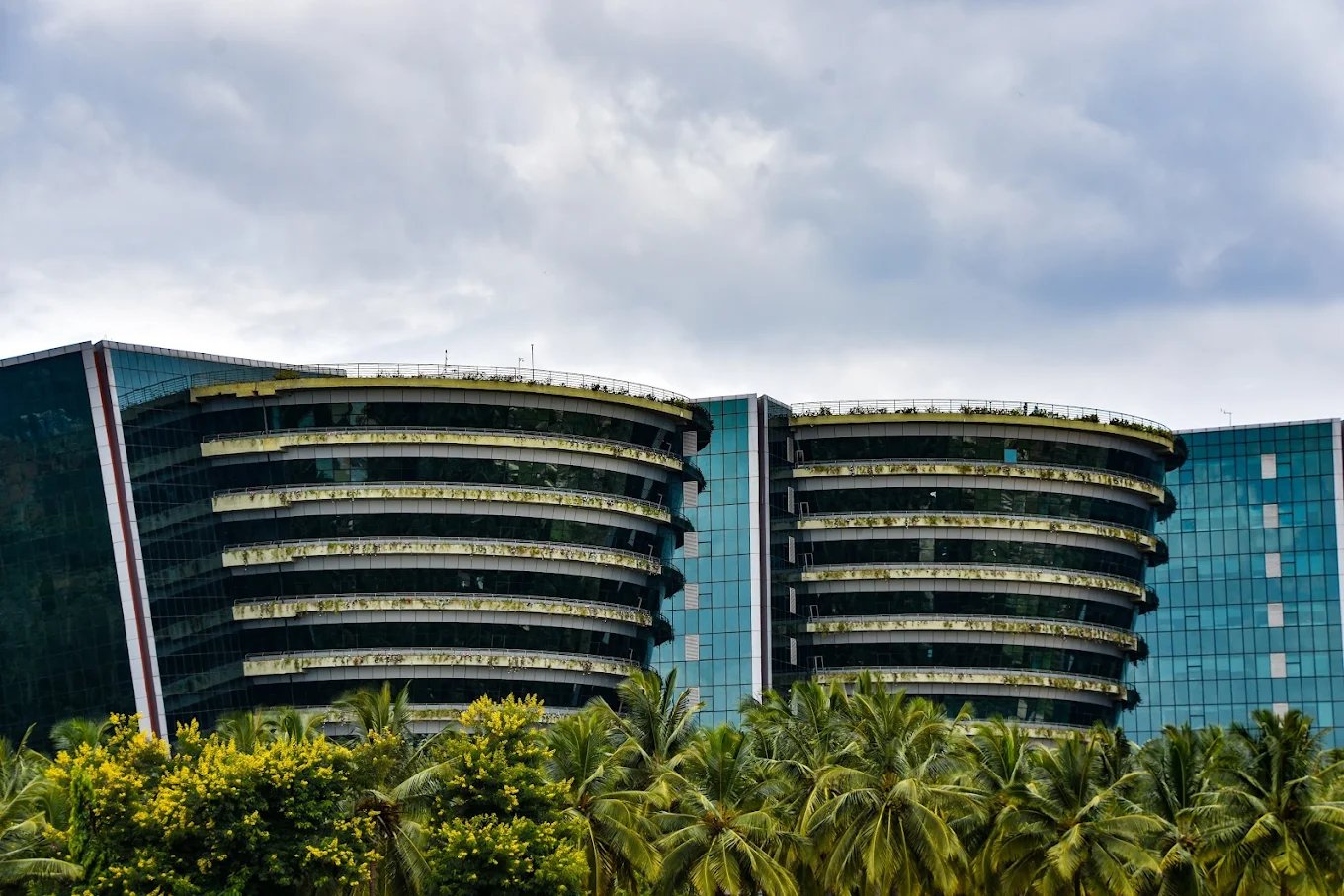
Energy efficiency drives most of these savings. Certified green buildings use about 35% less energy than conventional structures. Some estimates suggest green buildings can slash energy consumption by 30-50%. Bearys Global Research Triangle in bangalore, for example, is the first project to offer 84% Floor Efficiency, 74% less Water Usage and is a Zero Discharge Building, 54% Saving on Energy and 46% reduction in monthly Operating Costs. From the year 2024, BGRT has been a Net-Zero Energy meeting over 95% of electrical energy requirements from off-site Renewable Energy source.
Feel Better, Work Better
Since we spend roughly 90% of our time indoors, the quality of these spaces profoundly affects how we feel. Green buildings prioritize excellent indoor air quality with lower CO2 and fewer volatile organic compounds. Higher ventilation rates mean cleaner air and fewer health problems.
The results are measurable. People in green buildings take fewer sick days and have lower asthma rates. Workers in green, well-ventilated offices show a 101% increase in cognitive scores. Even sleep quality improves thanks to better outdoor views and natural daylight.
Higher Property Values and Greater Comfort
Investing in green architecture consistently pays off. Studies show green-certified buildings command rental premiums of 5-10% over conventional buildings, with sale price premiums of 10-20%, especially in competitive urban markets.
In Los Angeles, while traditional buildings rent for an average of AED 7.93 per square foot, tenants willingly pay AED 10.69 for LEED-certified space. Research from the University of Texas found that homes built to LEED standards showed an 8% value boost.
Beyond money, green buildings just feel better, comfortable temperatures, natural light, and spaces that promote physical wellbeing while reducing environmental impact.
Real Examples and What Certification Means
Looking at certified buildings helps us understand what makes a building truly sustainable.
Understanding LEED
LEED (Leadership in Energy and Environmental Design) is the world's most widely recognized green building rating system. Developed by the U.S. Green Building Council, it evaluates buildings through a points-based system.
The process involves registration, meeting prerequisites, and earning points through various sustainable strategies. Third-party verification comes from the Green Building Certification Institute. Based on points earned, buildings receive one of four levels: Certified (40-49 points), Silver (50-59 points), Gold (60-79 points), or Platinum (80+ points).
LEED examines everything - energy and water efficiency, materials selection, waste management, and indoor environmental quality. Currently, there are over 195,000 LEED-certified buildings in 186 countries.
What Net-Zero Actually Means
Net-zero buildings represent the cutting edge of green architecture. The core idea is simple: the building produces as much energy as it consumes over a year. Basically, the building breathes by itself.
There are different approaches. Net Zero Site Energy means the building generates as much energy on-site as it uses. Net Zero Source Energy accounts for energy lost during generation and transmission. Net Zero Energy Cost means the annual energy bill equals zero. Net Zero Energy Emissions means the building uses no emissions-producing energy or offsets emissions with clean energy exports.
Most net-zero buildings stay connected to the power grid, using conventional energy when renewable generation can't meet demand.
Buildings That Inspire
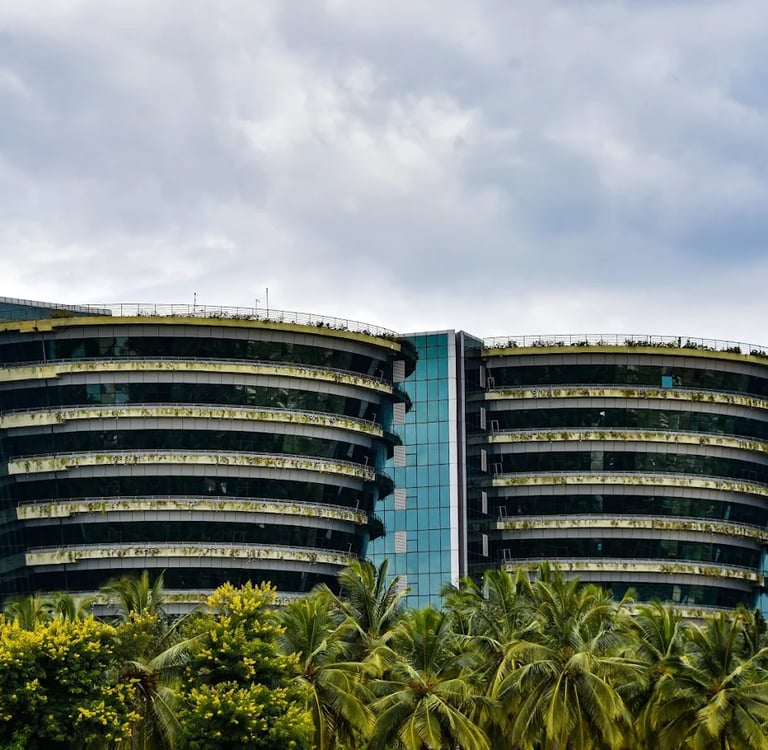
Some iconic green buildings show these principles in action. The "Bearys Global Research Triangle" (BGRT) by Bearys in Bangalore is the India's first to achieve LEED Platinum Research Park which has also now recognized as Net-Zero energy featuring an impressive living roof ecosystem.
The IGBC Platinum rated "Badriya Jum'a Masjid, Kodi-Kundapur, Coastal Karnataka, India" is recognized as "Asia's first Net-Zero Place of Worship". The world's first Green Mosque placed on the beautiful coasts of Arabian Sea and surrounded by the lush greens of the environs.
The Bearys Corporate Office, Residency Road, Bangalore. An India's first on-site Solar Net-Zero energy Experience Center to achieve IGBC Platinum LEED Certification.
Final Thoughts
Green architecture is far more than a trend. Buildings consume nearly 40% of energy resources and generate a huge portion of global emissions. But the principles of designing with nature, selecting smart materials, optimizing energy use, and creating healthier spaces offer powerful solutions.
What strikes the most is how practical green architecture really is. Despite misconceptions about high costs, sustainable buildings consistently deliver tangible returns while creating spaces people genuinely love. Certification systems like LEED provide clear frameworks, while iconic green buildings worldwide demonstrate real-world success.
Image source: Bearys Global Research Triangle - Bangalore, India.
Address
Oud Metha Offices, Unit No. 201-202, Umm Hurair 2 - Dubai - UAE. P.O. Box - 117721
Contact Us
+971 43 140 999
reachus@bearysglobal.ae
Quick links


© 2025 Bearys Global. All Rights Reserved | Privacy Policy