

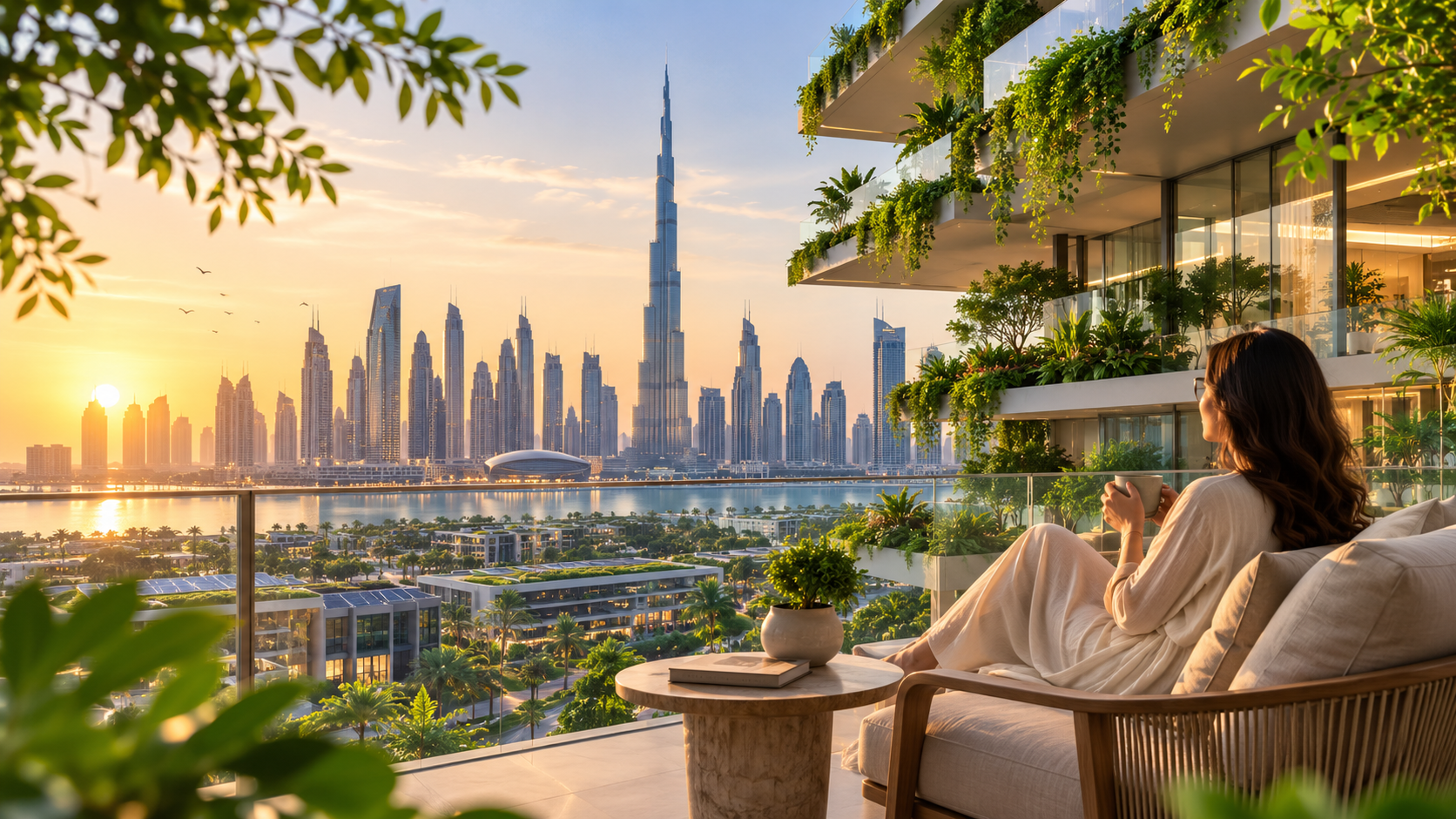
Green is the New Gold
When it comes to the UAE, gold has represented prosperity for generations.
From beautiful souks to celebrating milestones and becoming part of the visual language of the region known for ambitions, craftsmanship and values. But now it’s evolving into something more interesting.
Today, a different colour is quietly taking its place alongside gold: Green.
Not just a color, but a philosophy. And that’s where “Sustainable architecture”or “Green building“ comes into the picture.
What does that mean?
In a nutshell. Sustainable architecture involves practices creating buildings that are environment responsible, respond intelligently to the climate, use resources efficiently, minimise carbon-intensive materials and reduce their impact on the environment.
In the era of UAEs rapidly growing real estate landscape, sustainability is also moving from an added feature to a defining measure of architectural excellence.
From Gold Souks to Green Skylines
The UAE is well versed with its relationship between architecture and its environment. Long before the modern air conditions and sophisticated building management systems could exists, traditional Emirati architecture has already demonstrated to the desert climate through shade, orientation, courtyards, thick walls, wind movement and carefully considered openings.
Some of these practices you might have commonly seen or experienced:
- The Majlis, a space created for gathering and hospitality.
- The Barjeel, or traditional wind tower, demonstrates how architecture could function with natural air movement.
- The Mashrabiya, a patterned concept balancing privacy, illumination and ventilation.
- The Date Palm providing shade and material resources along with food.
These merely were not just the aesthetic elements but represented an understanding of a fundamental architectural principle.
A building should respond to its environment rather than simply stand against it.
– Syed Mohamed Beary (Founder & CMD of مجموعة بيريز)
The difference is that, contemporary sustainable architecture has access to advanced engineering, digital modelling, energy-efficient systems, intelligent facades and renewable-energy technologies that takes this philosophy much further.
The Desert Has Always Been an Architect
Sounds surprising right? Yes, the UAE’s environment presents architects with a unique design challenge.
The intensity of solar exposure, high temperatures, water scarcity and the need for efficient cooling makes the environmental performance particularly important. This is where sustainable architecture becomes more than just an aesthetic choice.
Building orientation can influence solar exposure, while shading can help reduce heat gain. High-performance building envelops can improve thermal performance, while efficiency cooling systems can reduce energy demand, landscaping invites greenery and creates more comfortable outdoor environments unlike the glass and steel facades commonly seen in the GCC, Water-conscious design and intelligent technologies can further improve resource efficiency and building performance.
In other words, the most successful green buildings breathes with its environment and do not attempt to ignore the desert. They learn from it.
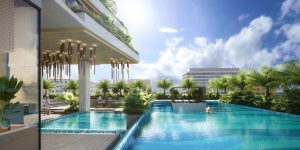
Onsite render – Bearys Wafira
Now let’s look at this green marvel “Bearys Wafira” by Bearys Global, an iconic Dubai landmark that symbolizes “Abundance of nature and wealth” blending green architecture with luxurious living.
The vision behind Bearys Wafira introduces a new dimension of climate-responsive design, where every architectural decision serves a purpose.
Its carefully considered orientation responds to solar exposure, while Mashrabiya-inspired elements help balance natural illumination, privacy and ventilation. A climate-sensitive design unlike any other. Facade foliage to reduce solar heat gain, creating a natural cooling system and allows cool filtered winds to blow during scorching Dubai summers. Lush planting creates a quieter, more natural environment while introducing greenery and biodiversity into the urban setting. Staggered floors structure like floating sky-gardens. And behind it all, advanced building intelligence continuously monitors and optimise performance proving nature and design in one evolving ecosystem with much more to unveil.
Curious to know more? Explore further and stay closer to the story – Contact Us.
Why Green Buildings Are the New Definition of Luxury
For decades, luxury living was often defined by size, finishes, views and exclusivity. Those elements still matter, but today’s sophisticated buyers increasingly recognise that luxury is also about:
- Natural light & air quality
- Energy efficiency
- Connection with nature
- Technological intelligence
- Long-term operating feasibility
- Responsible material choices
- Wellness
- Resilience
- A rare sense of a place.
This creates a new equation: Luxury + Sustainability + Wellbeing + Future-ready value.
From the Dhow to the High-Rise. Designing with Nature
The UAE’s traditional dhow is another meaningful symbol of regional ingenuity. Its design was shaped by water, wind, movement and purpose. Rather than fighting against its environment, the dhow worked with it, a philosophy that continues to respond in sustainable architecture today.
Now, sustainable architecture follows a similar philosophy. A building’s orientation, facade, shading strategy, landscaping and internal structure can be designed as an interconnected ecosystem. Because the objective is not only to make the building “green” but to make it intelligent in the way it interacts with its environment.
Sustainability shouldn’t be something as an added feature to the architecture in the end rather it should be embedded in the architecture right from the beginning.
Dubai is Building for more Sustainable Future
Dubai’s sustainability ambitions are increasingly reflected in the way the city is approaches urban development.
Dubai Municipality’s Al Sa’fat – Dubai Green Building Systems establishes mandatory sustainability requirements for new buildings and provides higher-performance classification through Silver Sa’fa, Golden Sa’fa and Platinum Sa’fa levels. The system is designed to improve building performance, enhance resource efficiency and reduce environmental implact.
On the other hand, the Dubai 2040 Urban Master Plan is a strategic 20-year blueprint to guide sustainable urban growth and transform the emirate into the best city to live in, places environmental quality, energy-efficient systems, ecological corridors, water management, parks & sustainable mobility among its urban priorities.
This indicates a larger transformation that the Dubai’s future skyline will not only be defined as solely by how high buildings rise, but how it will also intelligently perform.
The Bearys Global Perspective: Building Should Breathe
For us, sustainability is not merely a new marketing strategy. It is embedded in our DNA and in a legacy of development that spans more than 45+ years. Our portfolio includes India’s first LEED Platinum Research Park – the Bearys Global Research Triangle, as well as IGBC Platinum and Net-Zero projects.
This experience conveys a simple philosophy: Building must breathe like humans.
- They should respond to the climate.
- They should respond to light.
- They should utilize resources intelligently.
- They should create spaces where people can thrive and remain valuable not only for today’s occupants, but for generations to come.
We approach projects that are architecturally significant, functionally sound and environmentally conscious.
That philosophy now enters in a city of ambitions whose own identity is being shaped, a future-focused development – Dubai.
Green is more than a color
The Gold tells a story of wealth where the Green tells a story of continuity.
One represents what we possess and the other represents what we preserve.
A region that has proved itself from the desert trading communities into one of the world’s most dynamic urban centers, the next transformation is indeed the most important – Building growth without losing sight of the planet.
The skyline of tomorrow should not simply be iconic but also be intelligent, resilient, and responsible. And above all, it should be designed in a way that makes a difference to the Place, the People and the Planet.
Green is the new gold. And the most valuable buildings of tomorrow may be those that understand why.